

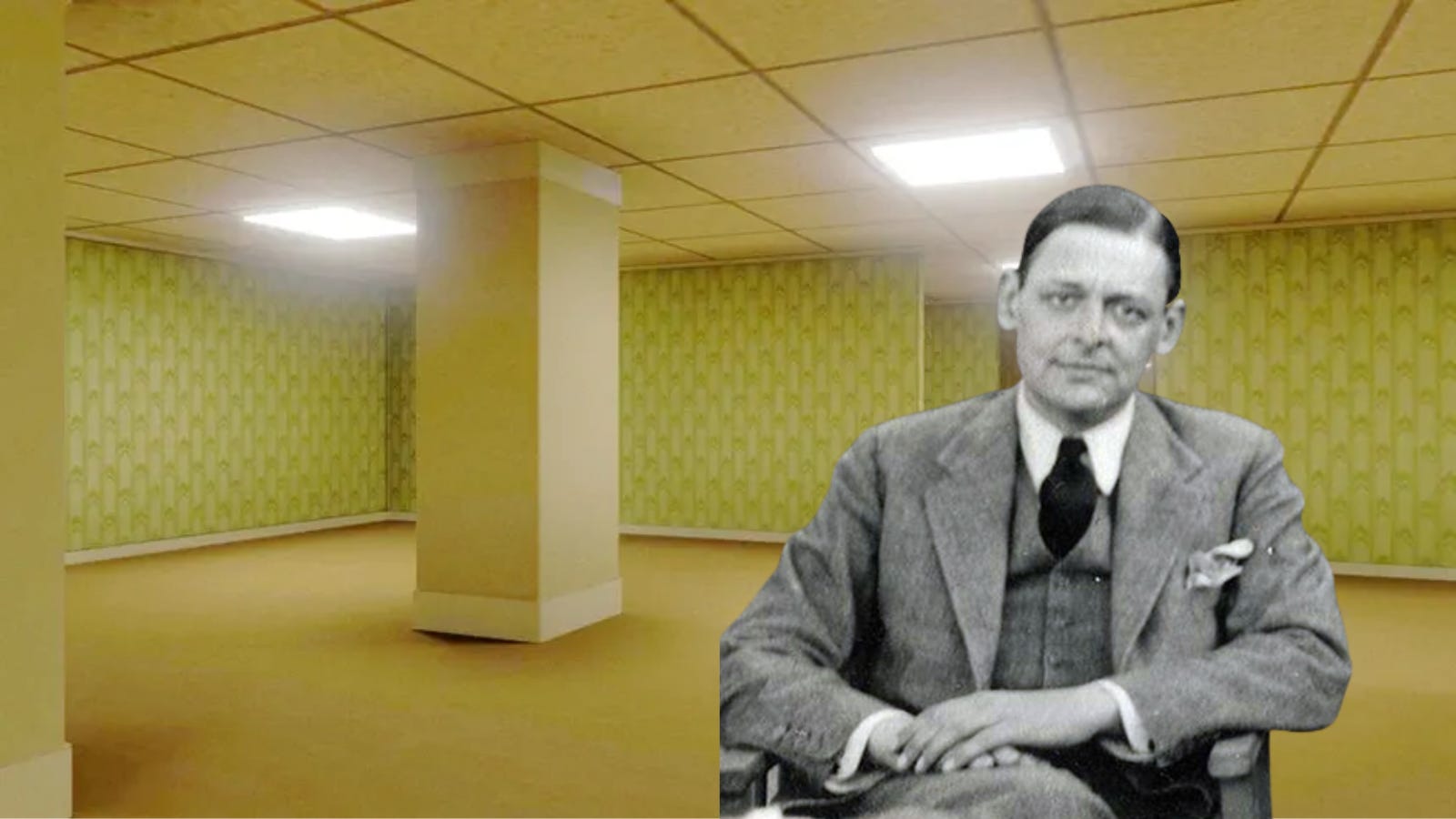
As I was walking out of a screening of “The Backrooms”, I was stuck on the idea that the film, which leaned into a 90s aesthetic with elements like VHS found footage, was directed by a guy who was born 6 years after the 90s ended.
I’m 40. Is this just my first experience of seeing a period piece and realizing that I’m old enough that my childhood was the period? Why was Kane Parsons reaching back into the era of my childhood to tell his story when it would have worked perfectly well in the 2020’s?
I got home and started to shape my thoughts into an essay titled “The Backrooms, Cheap AV equipment and the democratization of nostalgia,” to explore the way that Gen-Z (and it’s successors) reach back into the 90s and early 2000s as a place to ground themselves and to try and discover a feeling of nostalgia for an era they never experienced. I wrote a few sentences and then abandoned the project because I felt that, like the Backrooms, it would be an interesting exploration with no real destination.
But then I happened upon this quote from a post on Nostalgia Japonica - Real Japanese Aesthetics that hinted maybe something was there. The article titled “Japanese Aesthetics for Life and Death: In Praise of Shadows, Fades, Fragments” has the flavor of a manifesto written explicitly to explain the work of a Gen Z art collective working out of Japan.
What draws us more are fragments of the past drifting around, and the afterimages of bright futures that haunt us. The postwar order is now breaking down, images of the past keep flooding our feeds, and it feels as if the ghosts of futures once dreamed of are haunting the whole world.
Now we feel we can’t grasp our reality without facing even a bit of what those broken pasts and lost futures mean to us.
There is a stated belief that, at least for this particular art collective, to explain the present, they must piece together something from the past.
However eloquently this article supported my hypothesis, if it were just a single art collective working out of Japan, that’s hardly enough to say anything general about Gen-Z. And yet, a quick google revealed countless articles, posts and essays exploring Gen-Z’s obsession with the 90s. And though there are many theories, I want to add one more voice trying to understand the phenomenon.
My childhood was exclusive to me. There are pictures of key moments that I could share with others, but the vast majority of my early life lives on only in memory. I share pieces of it with those who were there at those moments, and to some I have told the stories. But otherwise it is mine.
I am a millennial, born in 1986.
That exclusivity is not a reality for my children. To be blunt, a creep at Google or Apple could get into my Photos account and piece together a pretty clear picture of our family’s day to day. They could track every hairstyle my children wore. There would be no milestone left un-photographed, or even filmed. Though I now regret it, my children have lived much of their life on camera. It wouldn’t be a complete picture, but it would be an authentic capture of what happened with dramatically more granularity than my childhood. Key moments, yes. But also drawings I didn’t want to throw away, but did want to keep a record of. Things I really didn’t want to film, but my kids asked me to. The first time any child did anything. And then pair this with the sharing of photo albums and the vicarious living-with of those who are members of those albums.
Family members who my children have never met can recount their lives to them as if they were Truman Burbank on the Truman Show.
I am compelled by this idea in an essay by Mandy Morris titled “The Last Generation to Remember Together”:
Nostalgia grows out of the possibility of being forgotten, taking shape in the space between what happened and what we remember, needing moments that are retold differently over time. When everything is recorded, there is little room for that transformation, and memory begins to function differently.
Today, everything is recorded, and perfectly replayable. As Mandy points out, the lack of fear of forgetting changes our relationship to memory. But I believe the more important observation in the Gen-Z situation is that there is no space between what happened to wonder, question, imagine or transform. Millenials are so terrified of forgetting that we document everything— a practice which ends up obstructing the formation of meaning.
Working through a mystery, I believe, is one of the great generators of meaning. I look at a photo of myself at my 7th birthday and I find the next photo representation of myself a few months later and all I can do about the in-between is piece together clues from the two images. But the act of filling in that gap reminds me that there are an endless chain of “whys” that connected photo 1 to photo 2. As Mandy Morris notes, in the retelling of these memories, we grow in our understanding not just of ourselves, but of our families and the contexts which formed us. I have been left speechless as I look through old photos and see a photo of me and my mother that mirrors an image of my wife and my own son. But it was not the photo itself that I was silent before, but the beyond of the photo. Did that moment mean the same to my mother as the parallel moment did for my wife? Was it just a passing event, or a habit? The speechlessness is a byproduct of the understanding that comes from walking beyond this photo into my own past and my relationship with my mother. Of retelling my story to myself from memory.
Assuming my children inherit my iCloud account, I do not believe they will have this opportunity. They have been too documented by both photo and video to have big questions about the space between.
I teach Highschool Film Classes and part of that job is watching and listening to what highschoolers are watching and thinking about. I’ve been struck by how many have asked the explicit question, “What was life like in the 90s?” It seems to be an era of particular fascination for the generations that follow after mine.
As a sort of regular ice-breaker, and to help me get a pulse on student tastes, I begin Monday classes by asking if anyone has been watching any film or television over the past week. There has been a sharp uptick in media from the 90s and early 2000s, and frankly, minimal interest in current work. Many students report that they watched through Friends, or Twin Peaks, or the “Before Trilogy”.
I’ve heard audible gasps from 16 year olds after I’ve cleaned out an old cabinet and they see a handheld digital camcorder. The idea of filming something on it is exciting enough that some have gone through the work of tracking down secondhand batteries and chargers to make the camcorders functional and then proceeded to do their class projects on them.
When everyone has a truly great camera in their pocket, why this fascination with old forms of media capture that are technically inferior in every way—which we also see in the opening scene of the Backrooms, which is presented as VHS found footage?
I obviously can’t speak conclusively, and there is almost certainly not a single answer, but my operating theory is this—Gen-Z and their successors have grown up on visual media, as they live through the fragmented and incoherent chaos of the present, like the artists at Nostalgia Japonica, they are looking to the past for meaning.
Research has demonstrated a much deeper connection for Gen-Z (and following generations) to visual media. They were the first generation to grow up with visual dominated social media platforms, and there are plenty of studies—particularly by marketing agencies—to show that Gen-Z consumes way more short form video content and visual media than earlier generations.
But why land on the 90s?
I suspect it is the ubiquity of VHS Camcorders that marked the era. Gen X and Elder Millenials were the first generations to be visually captured in enough detail that one can start to feel the everydayness of the content, but it was still cost-prohibitive enough to leave gaps, and room to wonder. Not just a moment captured in time, but hours of life in motion. Like the Lumiere’s capturing the simplicity of a train arriving at a station or workers leaving a factory, but in the modern home, and simple, and relatable.
And the inherent quality of the media itself leaves room for the imagination--faces outlined, moving, but ultimately unclear.
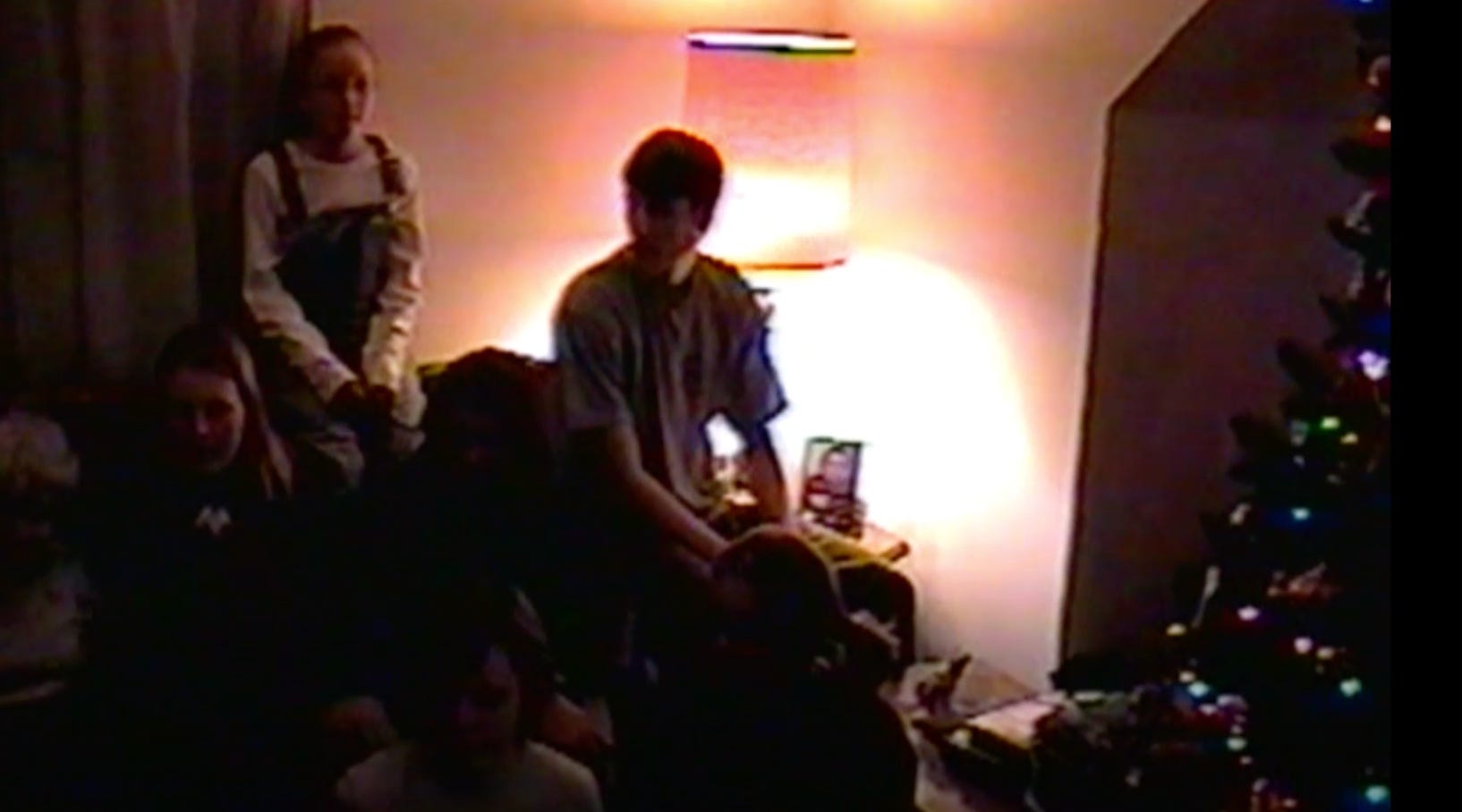
The photo above is from a Home Video uploaded to Archive.org. One can find countless videos like the source video online.
To my eye, images like the above allow for visual narratives that invite participation, room to imagine and create within the image. Horror filmmakers understand this in the use of found footage. Consider again the opening sequence of The Backrooms— Canted angles, shots of the floor, dropped cameras, allow the imagination to enter the story and it is so much more terrifying than anything you could actually see. The following clip is from the original Backrooms YouTube series. This is one of the earliest monster reveals in the series and presented here with an intense lack of clarity.
To put a fine point on the conclusion being drawn here, the prevalence of data over story in the infinitely documented present has removed the space needed for meaning-making—for the individual to enter into the images and create a place for themselves. And so, Gen-Z (and beyond) have turned to the past, to the last place where gaps existed, but that also spoke to their predominantly visual mode of communication.
The project as a whole feels like contemporary rehash of the struggle the early moderns had after the First World War.
In the wake of violence seen on a scale never before experienced, when technology brought hope but then betrays its uses for great evil, when everyone is aware that information is no longer neutral but a weapon itself, how does one ground oneself? Where does one find meaning?
In the world of art, at least 2 major schools of thought developed to answer this question. Consider the way a poet from each school treats a generally insignificant and everyday thing.
First, William Carlos Williams’ “The Red Wheelbarrow”:
so much depends
upona red wheel
barrowglazed with rain
waterbeside the white
chickens
Likely a poem you encountered in a High School English Class, and a poem that suggests very much with very few words. For me, the question that hovers over the work is, “Why does so much depend upon the red wheelbarrow?”
Well, no argument is made. It is merely stated “The wheelbarrow matters. The wheelbarrow is meaningful.” And it is the language of the poem that provides the context of meaning. Details are provided about the wheelbarrow but there is no effort to actually justify its existence apart from the words stating that so much depends upon it. This mode of thought is associated with the Neo-Modernists, who looked to ground meaning in the absolute present.
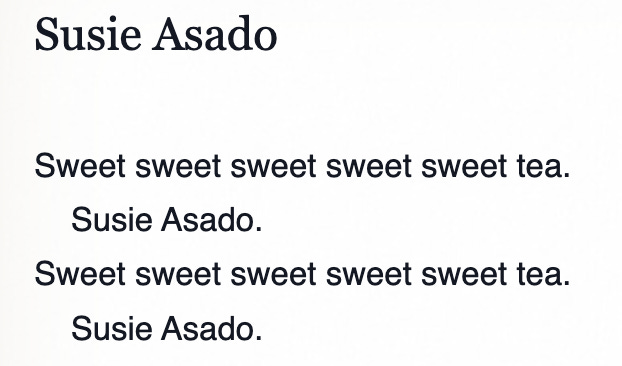
Gertrude Stein is another writer in this category. Though she would insist that “repetition” doesn’t truly exist, she would repeat words in order to “break” any history the reader had with them and allow them to hear the word as if for the first time and to understand it’s meaning in the here and now. Meaning is accessible through direct contact with the thing itself.
Compare “The Red Wheelbarrow” then to a poem by T.S. Eliot who is wrestling with the same loss of meaning. For the sake of space, I will present only the first 2 and last 2 stanzas of his work “Mr Eliot’s Sunday Morning Service.”
POLYPHILOPROGENITIVE
The sapient sutlers of the Lord
Drift across the window-panes.
In the beginning was the Word.In the beginning was the Word.
Superfetation of, TÒ ÈV
And at the mensual turn of time
Produced enervate Origen.[Ommitted Stanzas]
Along the garden-wall the bees
With hairy bellies pass between
The staminate and pistilate,
Blest office of the epicene.Sweeney shifts from ham to ham
Stirring the water in his bath.
The masters of the subtle schools
Are controversial, polymath.
Far from the repeating of the familiar that Gertrude Stein practiced, we begin with a kitchen sink of greek word components to create a term that T.S. Eliot constructed for this poem. In the full poem, from here we pass through the creation of the world, the Gospel of John, 3rd century theologians, 15th century art schools, nature framed through the lens of the holy sacraments. And to where? To Sweeney, who we know from external context to be a Boston-Irish Boxer, shifting on his buttocks in the bath.
Like the red wheelbarrow, the everyday still matters to Eliot, but only because it is contextualized in the grand sweep of history. The past gives the thing meaning. Eliot, and by extension other “Paleo-moderns” like James Joyce and Ezra Pound, have been labeled by some thinkers as “Proto-postmodernists,” in their exploration of the ways that meaning is entirely dependent upon context, over and against the William Carlos Williams school emphasizing inherent meaning in things.
One can quickly see other variations of the Paleo-modernist theme in James Joyce’s Ulysses which translates a day of the very ordinary Leopold Bloom’s life by passing it through Homer’s Odyssey. What right does Leopold Bloom have to occupy 700 pages of anything? Well maybe he has none, but the significance of his day can be constructed through the bulwarks of the past.
It is in this Paleo-modern approach that I see echoes of the Gen-Z project to stop the hemorrhaging of meaning in the present.1
But to understand the remedy for the loss of meaning, we need to properly diagnose the problem. And here I think Byung-Chul Han’s notion of the Erotic vs the Pornographic in the experience of beauty to be very helpful.
For Han, Beauty is essentially “Erotic.” He writes in Saving Beauty
Concealing, delaying and distracting are also spatiotemporal strategies of beauty. The calculation in halfconcealing produces a seductive gloss. The beautiful hesitates before appearing. Distraction protects it against direct contact. It is essential to eroticism. Pornography is without any distraction. It gets right down to it.
The argument continues to develop until it begins to illuminate our modern digital existences, and particularly as it revolves around “data.”
Data have something pornographic and obscene about them. They have no inside, no flip sides; they are not ambiguous. In this, they differ from language which does not permit things to come into perfectly clear focus. Data and information deliver themselves to total visibility and they make everything visible.
For Han, the culture of Data is fundamentally Pornographic—it is raw, exposed, and barren of mystery and therefore meaning. Or perhaps we might say the meaning of everything becomes commodification. Nothing is held sacred because it is all outward focused and driven by the utility of sharing for a “like.” Take a scroll through your Photos app and consider how much of your photo roll was taken with the intention of sharing as opposed to remembering.
Han additionally explores the idea of the cinematic technique of close-up as “pornographic,” such that, even if it is not of a sensitive part of the body, it removes mystery entirely.
I don’t think it is then crazy to push this idea to the comparative quality of photos today against the technologies of the past. The phone cameras now algorithmically fill in the lack of detail. We can zoom incredibly far and still parse the image. Think again of the quality of VHS recording, or the faded polaroid.
Over against the Pornographic is the Erotic. The Erotic attracts because there is mystery in it. It is veiled. It leaves room to wonder and to question.
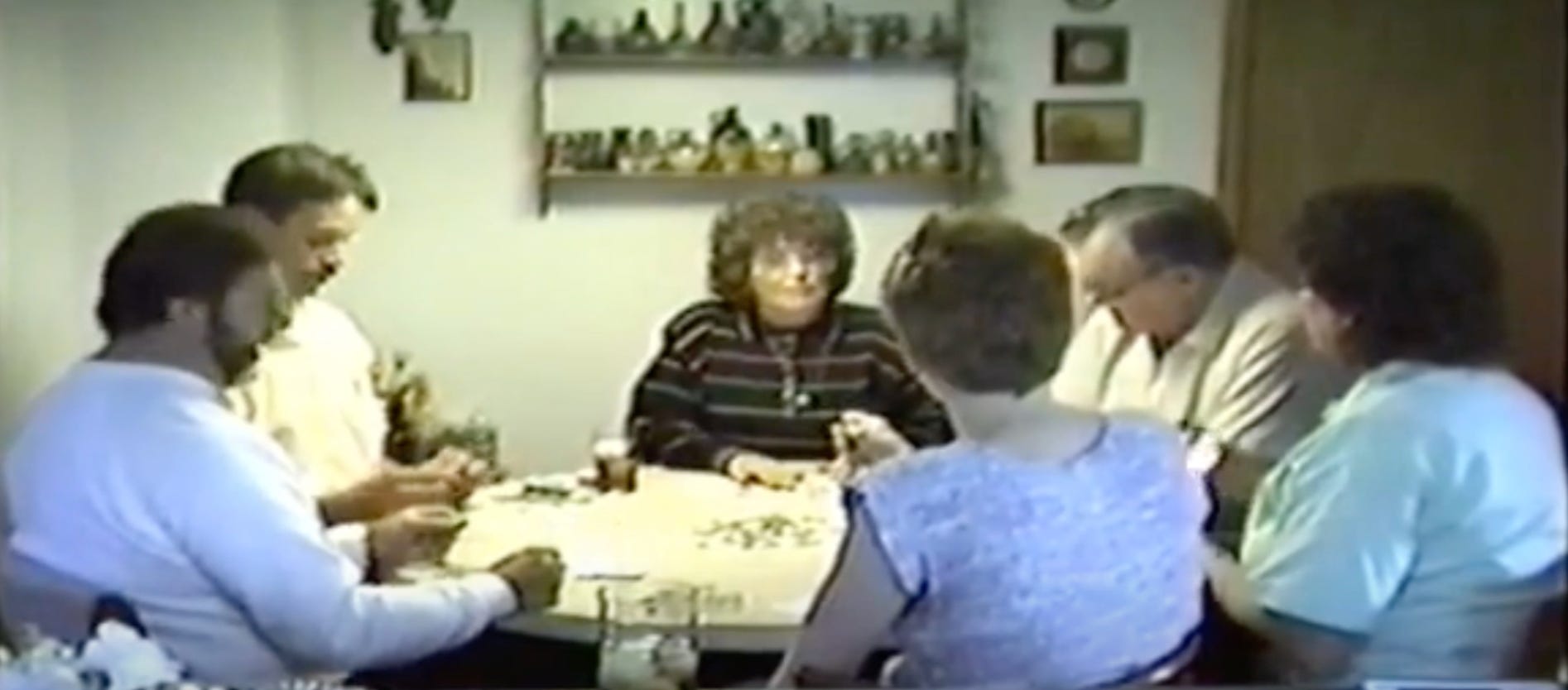
I suspect everyone who looks at the above image will see it differently. The lack of clarity is actually an invitation to piece together a narrative. I would claim it is Erotic, by Han’s definition. And as you begin to provide the narrative, you create and discover the meaning present in the image, as well as it’s personal significance to you.
This is another image pulled from a arbitrarily chosen VHS recording uploaded to the Internet Archive. I have no personal connection to it, but even still it evokes something in me.
Imagine a similar image but captured with the clarity of the iPhone 17. If I have a question about what they hold in their hand I pinch-to-zoom and have an answer. My questions about the image are answered with a data-like approach.
The personal media produced by the current generation is to be consumed. And so clarity and efficiency and the abolishment of mystery are of upmost importance.
Though Han is using the terms Pornographic and Erotic beyond the limited use we typically encounter the terms, note that Gen-Z has been widely documented to support restrictions on pornography and to oppose sex and nudity in TV shows at a significantly higher rate than Millenials.
Data is ugly. Raw exposure is not beautiful. And Gen-Z seems to be longing for the beautiful.
It has been popular to call Boomers to account for the damage they have caused society economically, socially, spiritually and in, it would seem, any other possible way. So I am trying to pay attention when I start to hear voices calling out Millenials for the destruction they bring to the table in their avoidance of sincerity and insistence on blood for injustice.
And here is where I become hopeful.
You have perhaps heard the line “There are lies, damned lies and statistics.” The Millenial generation, enamored, or perhaps simply overwhelmed with tools for the accumulation and processing of data are quick to find the monsters—the CEO whose carbon-footprint is massive, the billionaire who has funded x-many terrorist organizations, the politician who accepted so many dollars from X, Y, and Z—and it is not that this isn’t important. But frankly, I am of the opinion that however valuable the data can be, we humans aren’t meant to process that much. We aren’t designed to be data consumption machines. I am incapable of processing all the pain in the world coming at me in endless feeds. So what do Millenials do with the overwhelm? They focus their rage to attack the monster.
In his Substack Article, “Millenials Tried Being Angry. It Didn’t Work.” Samuel D. James makes a compelling argument that films like “Project Hail Mary” signal a shift from this Millenial posture of rage. He writes:
“There’s reason to suspect that Gen-Z audiences in particular are tired of the guilt, fury, and exhaustion of nonstop activism. Project Hail Mary is a movie for people who care about saving the world but don’t care about assigning blame before they do it.”
Evil is real and must be opposed, but if it is merely opposed without a vision of the good life it hinders, it is simply a pro-forma exercise. It lacks a teleology.
Additionally, when the injury is produced by on-demand, perfectly repeatable data, the wound can never heal. The possibility of forgetting is a necessity for nostalgia to form, but forgetting also allows retelling that heals. A story of pain can be made into a story of redemption if there is space to retell it, space to re-enter the story and walk a different path through one’s memory. This is not to lie to oneself, but to return to the story as the person you have become and see the old world from a place of growth.
Consider the fear many have of AI’s violent takeover when it determines statistically that humans are the most destructive force on earth and should therefore be eliminated. The machine has no narrative, only imminent directive. The Millenial Generation tries to live like the machine, never forgetting, seeking justice.
To return to the Paleo-moderns—they channeled history because not only was there mystery in the gaps that allowed for the construction of narratives, but it also signaled that history might be headed somewhere. It cannot be mere accident that T.S. Eliot eventually became a convert to Christianity (and interestingly even served on an advising council to the Anglican Church with none other than C.S. Lewis!) and many of his works after his conversion do not simply try to understand the present in light of the past, but to understand that history itself is moving toward redemption.
Read the echoes of Julian of Norwich’s famous quote in Little Gidding from Eliot’s Four Quartets
And all shall be well and
All manner of thing shall be well
When the tongues of flames are in-folded
Into the crowned knot of fire
And the fire and the rose are one.
Compare that to what he concluded in The Hollow Men 17 years earlier.
This is the way the world ends
This is the way the world ends
This is the way the world ends
Not with a bang but a whimper.
Hope that looks beyond the darkness.
And so what I hope I see in the work of many Gen-Z artists and following generations is a return to hope. The 90s, sitting on the cusp of great technological development where optimism can run high and is documented in such a way that the viewer can enter in and provide meaningful narratives in the space between VHS tapes and in the rolling scan lines of the screen, becomes a base for the visually oriented artist to plant a flag and look past the Millenial Rage to a better future.
The Backrooms film itself is about a man’s failure to deal with his past. And it does not seem unimportant that Kane Parsons goes back to the 90s, not only to a slower time, but in that time creates a fictional place that provides virtually infinite space. Clark, the protagonist’s, psyche generates the backrooms from the undealt with trauma of his past, an infinite maze where figures from the past spawn in ugly variation. The film itself serves as a caution that data cannot solve our problems. There must be space and we must take time to enter into our stories to process our pain, our history, and even our hopes. Clark, after all, wanted to be an architect, and it seems he accomplished this, but only in the darkest ways. If we will not allow space to exist in healthy ways in our memories, it will come to haunt us in unhealthy ways. We will either create vacancy to fill with meaning, or will live with a vacancy of meaning.
There is perhaps an interesting thread to be pulled here in considering the Millenial draw to true nostalgia-- both in merchandise and in moments they experienced in works like Vaporwave music and to consider this as a form of Stein’s repetition. Perhaps there is an explanation for why Millenials tolerated and even supported endless franchise sequels instead of demanding with their money original content. Obviously the thing from the past does not mean what it once did, but perhaps in endless encounters it will mean something new and become as meaningful as it once was?
It really is true that certain film scenes are often much more erotic than raw porn can ever hope to be. This is the comment I felt compelled to make.